
Sherwin-Williams Wall Mural
Project Snapshot
Location: Ohio City, Cleveland, Ohio
Project Type: Public Art Commission / Corporate Mural
Role: Public Art Project Manager and Artist Liaison
Project Sponsor: Sherwin-Williams
Client: Graffiti HeArt
Completion: 2022
Stakeholders: Graffiti HeArt, Sherwin-Williams, Selected Artist, Property Owner, City of Cleveland, Community Stakeholders, Fabrication and Installation Teams
Read more about the mural here: Behind the Scenes: Making a Mural feat. Evan Laisure
Images: Courtesy of the artist, Evan Laisure
Project Goal
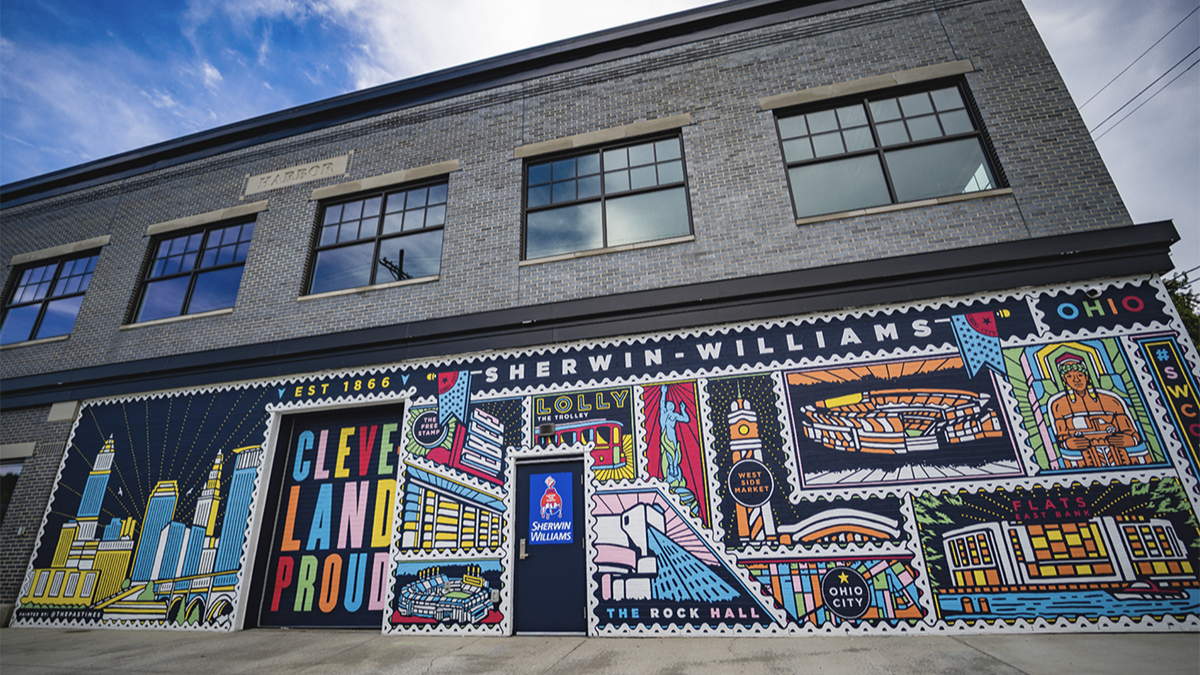
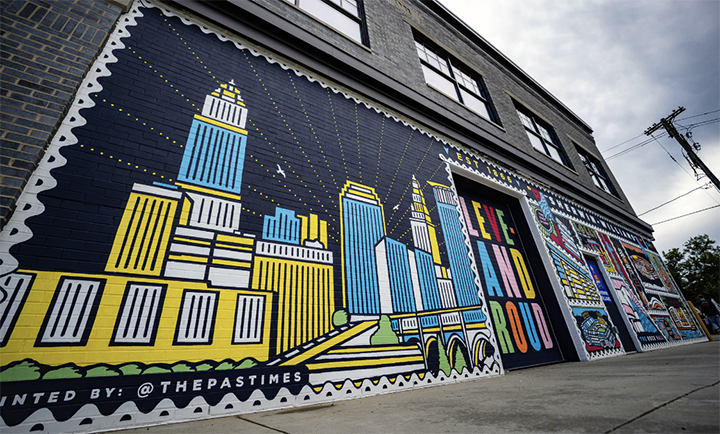
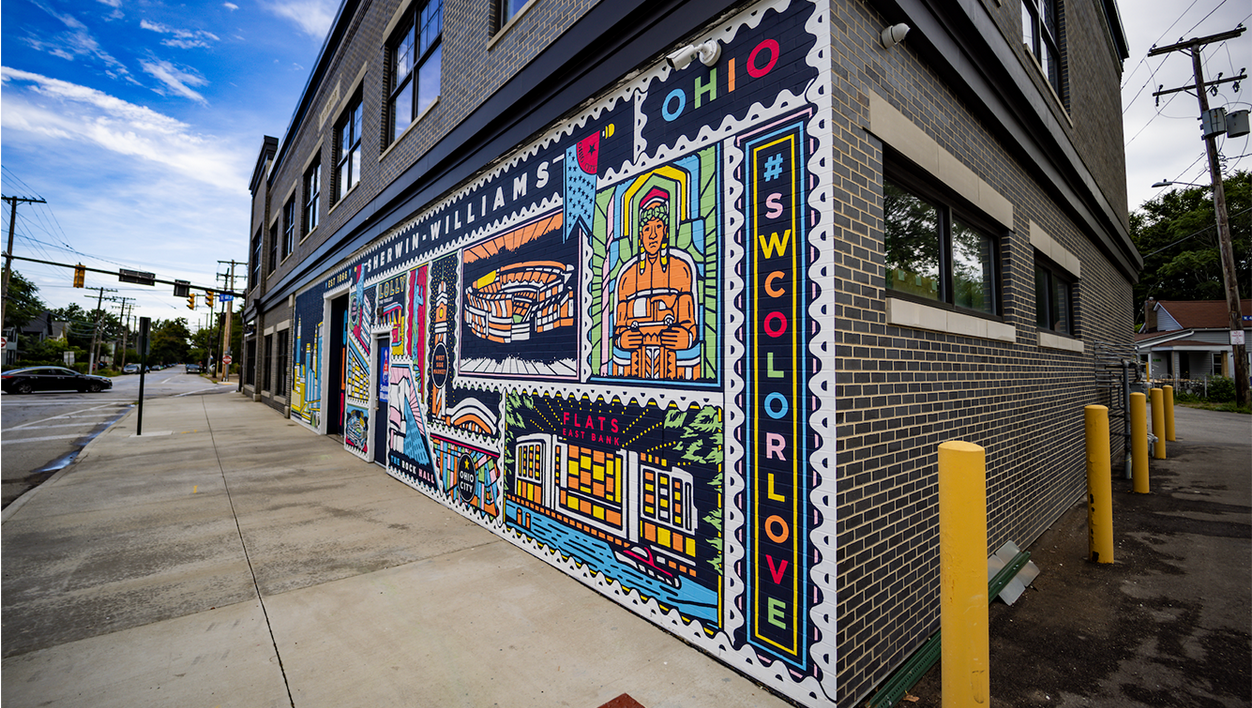
The Sherwin-Williams Wall Mural project was developed as a large-scale public artwork intended to contribute to the visual identity of Ohio City while celebrating creativity, community, and place through a highly visible mural installation.
Commissioned through Graffiti HeArt and supported by Sherwin-Williams, the project sought to create a permanent public artwork that would enhance the surrounding neighborhood while demonstrating the role public art can play in shaping the character of urban environments.
The project required coordinating multiple stakeholders, navigating municipal review processes, managing artist selection, and guiding the project from concept development through approval and implementation.
Context
Ohio City has become one of Cleveland's most active neighborhoods for public art, adaptive reuse, and community-driven placemaking. As investment in the neighborhood increased, murals emerged as an important tool for creating identity, supporting local culture, and activating public spaces.
Graffiti HeArt has played a significant role in advancing public art throughout Cleveland by connecting artists, property owners, businesses, and community organizations to create meaningful public-facing artwork.
The Sherwin-Williams mural represented a collaboration between corporate sponsorship, local arts advocacy, and community development. The project required balancing artistic vision, brand objectives, neighborhood context, property-owner interests, and municipal requirements within a structured project-delivery process.
Leadership and Project Management
As Public Art Project Manager, I was responsible for facilitating the project from artist selection through municipal review and implementation planning.
Key responsibilities included:
Developed project scope and implementation framework.
Facilitated artist identification, evaluation, and selection processes.
Served as primary liaison between Graffiti HeArt, Sherwin-Williams, artists, and project stakeholders.
Coordinated project schedules, milestones, and review deadlines.
Managed communication among artists, property owners, municipal agencies, and community stakeholders.
Facilitated design reviews and approval processes.
Prepared and coordinated submissions required for municipal review and permitting.
Guided artists through stakeholder feedback and revision processes.
Identified project risks and implementation challenges.
Coordinated project delivery requirements leading to installation.
Project Delivery
Initiation
Established project objectives, stakeholder expectations, site requirements, and implementation goals.
Defined project scope, budget parameters, approval pathways, and artist-selection criteria.
Identified opportunities to align artistic vision with community context and project objectives.
Planning
Developed artist procurement and evaluation procedures.
Coordinated project schedules and review milestones.
Established communication frameworks among project stakeholders and municipal agencies.
Prepared project materials necessary for design review and approval processes.
Execution
Managed artist selection and design development activities.
Facilitated collaboration among artists, client representatives, property owners, and review agencies.
Coordinated project presentations, stakeholder meetings, and design revisions.
Supported preparation of materials required for city approvals and implementation planning.
Monitoring and Control
Tracked project milestones and approval deadlines.
Managed stakeholder feedback and design-review processes.
Addressed issues affecting schedule, approvals, and project implementation.
Maintained alignment among artistic intent, client expectations, and municipal requirements.
Closeout
Facilitated completion of project approvals and implementation planning.
Coordinated final stakeholder reviews and project documentation.
Supported transition from project development to mural installation and completion.
Outcomes
The project successfully brought together corporate sponsorship, arts advocacy, and community development through the creation of a highly visible public artwork in one of Cleveland's most active urban neighborhoods.
The mural contributed to Ohio City's growing public-art landscape while demonstrating the effectiveness of collaborative project delivery involving artists, businesses, community organizations, and municipal agencies.
The project also established a framework for navigating the complex review, approval, and stakeholder-management processes often required for public art projects in urban environments.
Reflection
The Sherwin-Williams Wall Mural demonstrates that successful public art projects depend as much on process as they do on artistic vision.
While the completed mural serves as the project's most visible outcome, its realization required careful coordination among diverse stakeholders, management of competing priorities, navigation of municipal review procedures, and clear communication throughout the project lifecycle.
This experience continues to inform my work leading exhibitions, public art commissions, and capital projects today. Whether working with artists, curators, designers, contractors, or public agencies, successful outcomes emerge through thoughtful collaboration, structured project management, and a shared commitment to realizing ambitious ideas in the public realm.